Starting with Alan Watts
That night at Pour House, I got talking with the person working the door about Alan Watts. Watts spent his life carrying ideas between cultures, and the one he carried most was simple: to know the world you have to know yourself, and to know yourself you have to know the world. She wanted to study up on him, so here's the path I'd suggest. The band that night has its own post.
Who he was
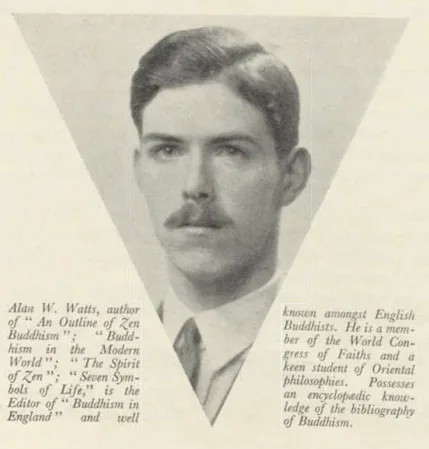
Alan Watts (1915 to 1973) was a British-born writer and speaker who moved to the United States and spent his life explaining Zen, Taoism and Indian philosophy to Western listeners. He wrote more than twenty-five books, but most people meet him through his recorded talks. They're playful and funny, and good on a walk.1
A reading path
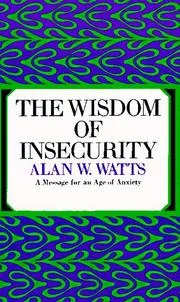 Start here
The Wisdom of Insecurity
1951. Short and direct: why chasing security makes us anxious, and what changes when you live in the present.
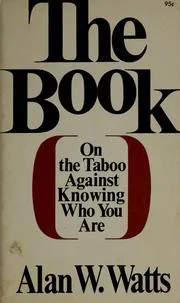 Then
The Book: On the Taboo Against Knowing Who You Are
1966. His big idea in plain language: the separate self is a story we tell, and we're part of everything going on.
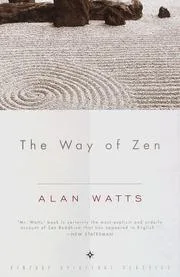 Deeper
The Way of Zen
1957. Where Zen came from, how it grew out of Taoism and Buddhism, and what practice looks like.
 Last
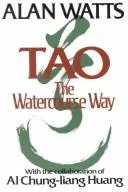
Tao: The Watercourse Way
1975. His last book, finished after his death, about flowing with things instead of forcing them.
A bridge both ways
A lot of Watts came from Japan. He learned Zen in large part through Japanese teachers and writers: D.T. Suzuki's books, and in the late 1930s, study in New York under Sokei-an, a Japanese Rinzai Zen teacher.3 His first wife's mother was Ruth Fuller Sasaki, who met Suzuki in Japan in 1930, trained in Zen in Kyoto, and later married Sokei-an.4 So much of the Watts we hear in English came through Japan, and this page carries him back the other way, in both languages. Nobody builds one alone.
Know yourself, know the world
Watts made the same point over and over: these are one job, not two. The Book is subtitled On the Taboo Against Knowing Who You Are, and its argument is that the separate self we guard is a story. Look closely and you're made of the world you're looking at. Meeting another culture works the same way: you learn about them, and about what you were expecting. You can't know the world from behind a wall, and you can't know yourself without a world to see yourself in.
My favorite parts
I've been meditating on and off for twenty-some years, and the Watts idea I come back to most is this one, as I remember it: don't try to quiet the mind; the mind will quiet itself. One day when I was anxious, I tried it on the feeling itself. I didn't try to stop being anxious. I told myself it was okay to be anxious. That worked better than anything I'd forced.
The talks I keep saved:
- Eastern Wisdom and Modern Life, his TV series from around 1960, remastered on YouTube: short episodes on time, the void, death, nonsense. I saved the whole run.
- "You Can't Do It!", from A Conversation with Myself (1971): on why you can't force yourself into being natural.
- Life as music, not a journey: you don't play a song to get to the end of it. The animated versions on YouTube are a good first listen.
Audiobooks
I listen to these a lot. They're his lectures, collected from the Alan Watts audio archives, in his own voice:
- Out of Your Mind: a whole course of talks, and the one I'd start with.
- You're It!: on hiding, seeking and being found.
- Just So: I'm partway through this one now.
Most of his books come as audiobooks too. Two ways to get them that keep the money local or free: Libro.fm, where you pick an independent bookstore to support (I'd pick Quail Ridge), and Libby, with a Wake County Public Libraries card, which costs nothing.
Where to get the books
In Raleigh, Quail Ridge Books in North Hills can order any of these (quailridgebooks.com), and the library has most of them. For background, there's his Wikipedia page.
Sources
- Alan Watts, Wikipedia ↩
- Alan Watts at the University of Vermont, 15 June 1958, Wikimedia Commons ↩
- Sokei-an, Wikipedia ↩
- Ruth Fuller Sasaki, Wikipedia ↩

Photos of Watts: public domain, via Wikimedia Commons (a 1937 clipping). Book covers via Open Library, shown to identify the editions.

その夜、Pour House で、私は入口のスタッフの方とアラン・ワッツの話になりました。ワッツは生涯、文化と文化のあいだで考えを運び続けた人で、彼がいちばん伝えたかったことはシンプルです。世界を知るには自分を知らなければならず、自分を知るには世界を知らなければならない。彼女はワッツについて学んでみたいと言っていたので、私がおすすめする入り方をまとめました。その夜のバンドについては別の記事に書いています。
どんな人か
アラン・ワッツ(1915〜1973)はイギリス生まれの作家・講演家で、アメリカに渡り、禅や老荘思想、インド哲学を西洋の人々に紹介することに生涯を捧げました。著書は25冊以上ありますが、多くの人は録音された講演を通して彼に出会います。遊び心があってユーモアにあふれ、散歩しながら聴くのにぴったりです。1
読む順番
- 次に
The Book: On the Taboo Against Knowing Who You Are
1966年。彼の大きな考えをやさしい言葉で。切り離された「自分」は私たちが語る物語であり、私たちは起きていることすべての一部だ、ということ。
両方向の橋
ワッツの多くは日本を通ってきています。彼は禅の多くを日本の師や書き手から学びました。鈴木大拙の著作、そして1930年代後半にはニューヨークで臨済宗の禅僧・佐々木指月(Sokei-an)のもとで学んでいます。3最初の妻の母はルース・フラー・ササキで、1930年に日本で鈴木大拙と出会い、京都で禅の修行をし、のちに指月と結婚しました。4英語で聴くワッツの多くは日本を通ってきたものです。このページは、二つの言語で、彼を逆向きに運び返します。橋はひとりでは架けられません。
自分を知り、世界を知る
ワッツが何度も繰り返したのは、この二つは別々の仕事ではなく、ひとつだということです。『The Book』の副題は「自分が何者かを知ることへのタブーについて」。私たちが守っている切り離された「自分」は物語にすぎず、よく見れば、自分は見ている世界そのものでできている、というのがその主張です。ほかの文化に出会うときも同じです。相手について知り、同時に自分が何を期待していたのかも知ることになります。壁の内側から世界を知ることはできないし、自分を映す世界なしに自分を知ることもできません。
私の好きなところ
私は二十年以上、瞑想をしたりやめたりしてきました。いちばんよく思い出すワッツの言葉は、私の記憶ではこうです。「心を静めようとしなくていい。心は自分で静まる」。ある日、不安だったときに、その感情そのものにこれを試してみました。不安を止めようとせず、「不安でもいいんだ」と自分に言ったのです。無理に何かするより、ずっとうまくいきました。
保存して繰り返し聴いている講演:
- Eastern Wisdom and Modern Life:1960年ごろのテレビシリーズで、YouTube でリマスター版が見られます。時間、空、死、ナンセンスについての短い回。全話保存しています。
- 「You Can't Do It!」:A Conversation with Myself(1971年)より。自然であろうと無理に努力することはできない、という話。
- 人生は旅ではなく音楽:曲を演奏するのは、終わりにたどり着くためではない。YouTube のアニメ版が入門にちょうどいいです。
オーディオブック
これはよく聴いています。アラン・ワッツの音声アーカイブから集められた、本人の声による講演です:
- Out of Your Mind:講演をまとめたひとつの講座。最初に聴くならこれ。
- You're It!:隠れること、探すこと、見つけられることについて。
- Just So:いま途中まで聴いています。
本の多くもオーディオブックになっています。お金を地元に回すか、無料で聴く方法がふたつあります。独立系書店を選んで応援できる Libro.fm(私なら Quail Ridge を選びます)と、ウェイク郡公共図書館のカードがあれば無料の Libby です。
本を手に入れるには
ローリーなら、ノースヒルズの Quail Ridge Books でどれも取り寄せできます(quailridgebooks.com)。図書館にもほとんどあります。背景を知るには ウィキペディア もどうぞ。
出典
- Alan Watts、ウィキペディア(英語) ↩
- 1958年6月15日、バーモント大学のアラン・ワッツ、ウィキメディア・コモンズ ↩
- 佐々木指月、ウィキペディア(英語) ↩
- ルース・フラー・ササキ、ウィキペディア(英語) ↩
ワッツの写真:パブリックドメイン、ウィキメディア・コモンズより(1937年の切り抜き)。本の表紙は版を示すため Open Library より。
Want the next one?
New posts by email, now and then. Nothing else.